
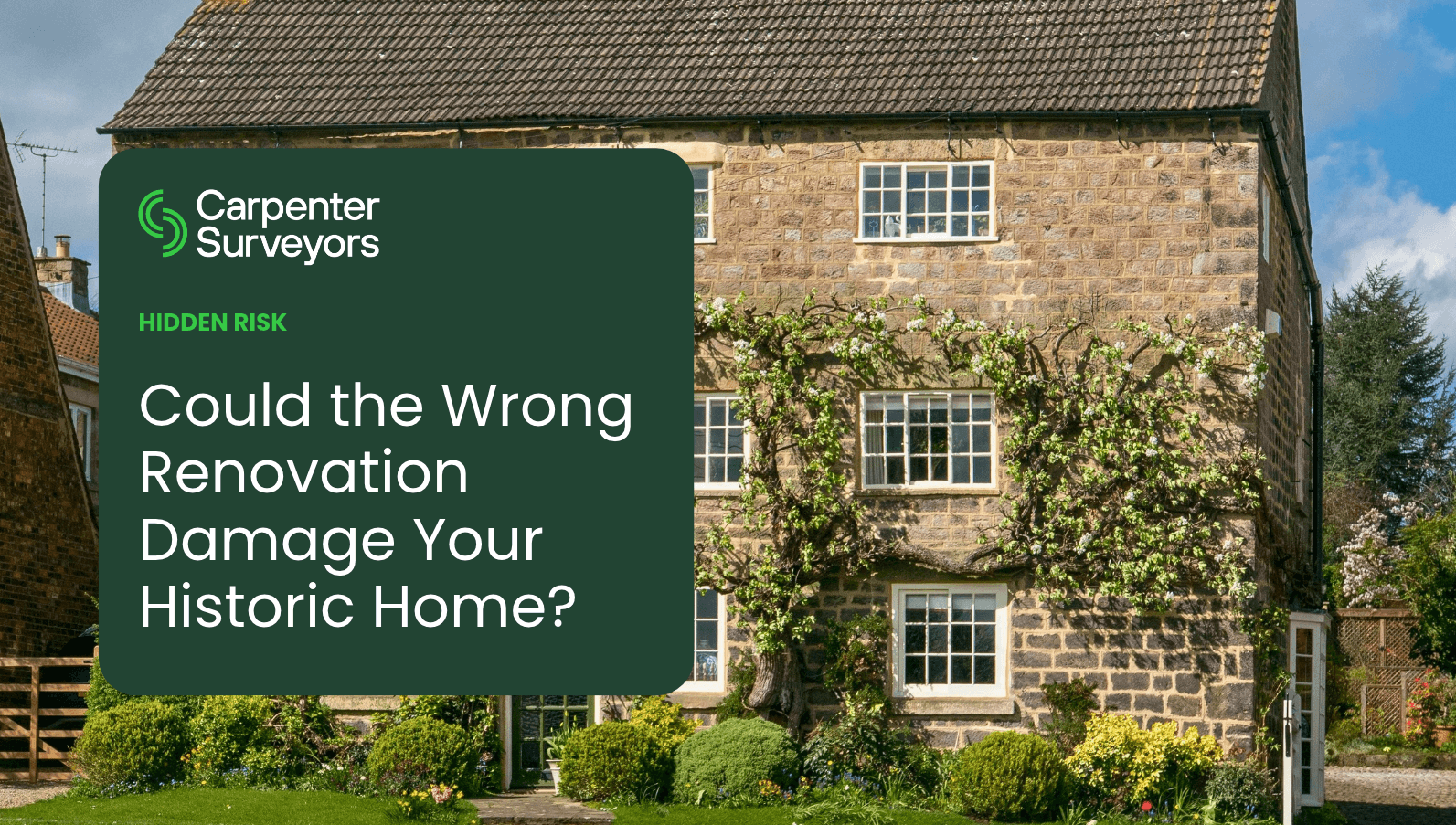
Why modern materials, well-intentioned improvements and unsuitable repairs can sometimes cause more harm than good to Britain's older properties.
There's something special about an older home.
Perhaps it's the character of exposed timber beams, the warmth of traditional brickwork, original fireplaces or the craftsmanship that has survived for generations.
Across Worcestershire, Warwickshire and the wider Midlands, historic cottages, Victorian terraces, Georgian townhouses and traditional farmhouses form an important part of our architectural heritage.
Many have stood for well over a century, weathering everything the British climate has thrown at them.
Yet some of the greatest threats to these buildings don't necessarily come from age or neglect.
They can come from renovations carried out with the very best intentions.
A modern cement render, a waterproof coating or an incorrectly installed insulation system might seem like a sensible improvement. However, when modern products are introduced into a traditionally constructed building without understanding how it works, the consequences can include trapped moisture, deteriorating masonry, timber decay and costly remedial work.
For buyers, the challenge is understanding whether previous improvements have protected the property or introduced problems that may only become apparent years later.
This is one reason Carpenter Surveyors has developed its own specialist Heritage Building Survey, designed specifically for the complexities of historic properties.
Understanding the difference between traditional and modern construction is essential, whether you're buying an older property or planning to improve one.
1. Old Buildings Were Designed to Manage Moisture Differently
One of the most important differences between traditional and modern buildings is how they deal with moisture.
Many older properties were constructed using solid brick or stone walls, lime mortar, lime plaster and natural materials that can absorb and release moisture as conditions change.
Modern buildings, by comparison, commonly use cavity walls, damp-proof courses, membranes and other systems designed to control the movement of moisture.
Neither approach is inherently wrong. They're simply different methods of construction.
Problems can arise when materials designed for one type of building are introduced into another without considering how they interact.
For example, a traditional solid wall may have managed moisture effectively for generations. Applying an impermeable coating can restrict its ability to dry, particularly if rainwater is entering through defective gutters, damaged pointing or other weaknesses.
The result can be moisture accumulation within the wall rather than the improvement the homeowner intended.
The important lesson? An older property should be understood as a complete building, not simply a collection of individual problems to repair.
2. Cement Mortar: When a Stronger Repair Isn't Necessarily Better
Imagine purchasing a beautiful Victorian cottage with attractive original brickwork.
You notice that some of the mortar joints are deteriorating, so you arrange for the walls to be repointed using a modern cement-rich mortar.
It sounds perfectly reasonable.
Unfortunately, traditional bricks and softer stonework can behave differently from modern masonry.
Lime mortar is generally more flexible and permeable than dense cement-rich mortar. It can accommodate small movements and allow moisture to evaporate through the joints.
A hard, incompatible mortar may restrict drying and concentrate stresses within softer masonry.
Over time, this can contribute to deterioration of the brick or stone itself.
In some circumstances, the mortar remains intact while the surrounding masonry begins to fail.
What should homeowners consider?
Before repointing an older property, it's important to establish the type and condition of the original masonry and mortar.
Compatible lime-based materials may be appropriate, but the correct specification depends on the building, its exposure and existing construction.
This is particularly important for period properties where preserving the original building fabric is essential.
3. Waterproof Paint and Render Can Sometimes Make Damp Worse
Damp is one of the most common concerns associated with older properties.
When staining, peeling decoration or deteriorating plaster appears, the temptation is often to cover the affected area with a waterproof coating.
But what happens if the moisture is still present behind that coating?
If a wall cannot dry effectively, moisture may accumulate within the building fabric or emerge elsewhere.
Potential consequences include:
Deterioration of plaster and decorative finishes.
Damage to traditional brickwork and stone.
Increased risk of timber decay where moisture reaches vulnerable components.
Salt contamination and surface deterioration.
Continued dampness despite repeated cosmetic repairs.
This is why identifying the source of moisture is so important.
A leaking gutter, defective flashing, damaged roof covering, raised external ground level or inadequate ventilation may be contributing to the problem.
Simply treating the visible symptoms can leave the underlying cause unresolved.
A useful question for anyone buying an older home is not just whether damp is present, but why it is occurring.
Historic England's guidance, Assessing Damp in Historic Buildings, reinforces the importance of appropriate investigation and understanding the limitations of different moisture assessment techniques.
4. Insulation: A Good Improvement That Needs Careful Planning
Improving energy efficiency is understandably a priority for many homeowners.
With heating costs and environmental considerations influencing renovation decisions, insulation is often high on the list.
However, insulating a traditional property requires careful consideration.
Older solid-wall buildings may respond differently to insulation compared with modern cavity-wall homes.
If internal or external insulation is poorly designed or installed, it can change the temperature and moisture conditions within the existing walls.
This may increase the risk of condensation within the construction, potentially leading to hidden deterioration.
The risks depend on several factors, including:
The condition and composition of the existing walls.
Exposure to wind-driven rain.
The insulation materials and installation method.
Existing moisture problems.
Heating and ventilation arrangements.
The building's architectural or historic significance.
This doesn't mean older homes cannot be made more energy efficient.
Far from it.
It means improvements should be considered as part of a carefully planned, whole-building approach.
Measures such as appropriate draught-proofing, roof insulation, maintenance of windows and improvements to heating controls may offer useful opportunities, depending on the property.
For historic buildings, the aim should be to improve comfort and performance without compromising the building's long-term condition or character.
5. Replacing Original Windows: Are You Losing More Than Character?
Original timber windows can be among the most distinctive features of an older property.
They also frequently become a target for modernisation.
Homeowners may assume that replacing traditional sash or casement windows with modern units is automatically the best solution.
However, original windows may be repairable, and careful refurbishment can sometimes provide meaningful improvements in comfort and performance.
Appropriate draught-proofing, maintenance and carefully selected secondary glazing may be worth considering.
Replacement windows can also affect the appearance and significance of a historic building.
For listed properties, changes that affect special architectural or historic interest may require Listed Building Consent.
Before removing original joinery, it is worth considering whether repair or sensitive upgrading could achieve the desired result.
Once historic features have been removed, their authenticity can be difficult to recreate.
6. Removing Walls and Opening Up Historic Interiors
Open-plan living has become a defining feature of modern home renovation.
But older buildings weren't necessarily designed around the same structural principles as contemporary homes.
Removing internal walls, altering chimney breasts or creating large openings can have implications for structural stability.
In traditional properties, structural arrangements may have evolved over many decades, sometimes through previous extensions and alterations.
A wall that appears relatively insignificant could be contributing to the support or restraint of other building elements.
Similarly, historic timber framing and roof structures may behave differently from modern construction.
Before carrying out significant alterations, appropriate structural assessment is essential.
Where a building is listed, the effect on its historic character must also be considered.
A renovation should enhance how a property is used without putting the structure or historic fabric at unnecessary risk.
7. Listed Buildings: The Additional Responsibility of Ownership
Owning a listed building can be an extraordinary privilege.
It also comes with responsibilities.
Listed status recognises a building's special architectural or historic interest, and legal controls may apply to alterations affecting that interest.
Importantly, listing is not necessarily limited to the outside of a property.
Internal features, fixtures and other historic elements may also be protected.
Work that requires Listed Building Consent but proceeds without it can have serious legal consequences.
This makes professional advice particularly valuable when considering:
Extensions or changes to the building's layout.
Replacement windows and doors.
Alterations to historic fireplaces or internal features.
Changes to traditional materials and finishes.
Significant energy-efficiency improvements.
Repairs that may affect historically important fabric.
Not every minor repair automatically requires consent. However, where there is uncertainty, homeowners should consult their local authority's conservation team before proceeding.
8. Buying an Older Home? Look Beyond the Renovation
A freshly renovated property can be extremely appealing.
New kitchens, modern bathrooms, freshly plastered walls and immaculate decoration create a strong first impression.
But attractive finishes don't necessarily reveal what has happened beneath them.
When buying a period property, it is worth asking:
Have original materials been replaced?
Modern plaster, cement render or inappropriate pointing may warrant closer examination.
Have damp problems been investigated or simply covered over?
New decoration doesn't establish whether an underlying moisture issue has been resolved.
Have structural alterations been carried out?
Removed walls, extensions and altered roof structures may require further investigation and supporting documentation.
Have insulation improvements been designed appropriately?
Understanding the construction of the building is important before assuming that modern upgrades are suitable.
Are there restrictions on future alterations?
Listed status and conservation area controls can influence what owners may be able to change.
These are precisely the types of considerations that make a professional building survey so valuable when purchasing an older property.
9. Why Historic Properties Deserve a Specialist Heritage Building Survey
Buying a historic property is very different from buying a modern home.
Traditional construction methods, centuries of alterations, specialist repair requirements and legal obligations can introduce complexities that aren't always immediately apparent.
At Carpenter Surveyors, we recognise that historic buildings require a different approach.
That's why our dedicated Heritage Division has developed its own Heritage Building Survey, specifically designed for historic and traditionally constructed properties.
Our Heritage Division is staffed by surveyors with considerable experience inspecting a broad range of historic buildings, from period houses and traditional cottages to listed properties of architectural and historical significance.
Unlike a standard RICS Level 3 Home Survey, our specialist Heritage Building Survey has been developed to provide the scope and depth of information we believe purchasers of historic buildings need.
It considers not only the property's condition, but also the wider implications of owning, maintaining and repairing a historic building.
Looking Beyond the Visible Defects
A specialist heritage survey can help prospective purchasers understand:
Traditional construction: How the building was constructed and how its materials and structural elements are intended to perform.
Existing defects: Identifiable deterioration, structural concerns, moisture-related issues and the potential implications of previous repairs.
Inappropriate alterations: Evidence of modern materials or interventions that may be incompatible with the original building fabric.
Future repairs: Areas where specialist materials, techniques or contractors may be required.
Maintenance responsibilities: The ongoing demands and potential financial implications of looking after an older building.
Heritage considerations: Issues relating to listed status, conservation restrictions and the need for appropriate further enquiries.
For listed buildings, identifying alterations that may not have received the necessary consent is particularly important.
In certain circumstances, a new owner can face enforcement action relating to unauthorised work undertaken by previous owners.
Understanding these potential liabilities before purchasing can help avoid unexpected and potentially substantial expenditure.
Our aim is to give purchasers the information they need to decide whether a historic property is right for them, with a clearer understanding of both its character and its responsibilities.
10. Protecting Our Historic Homes for Future Generations
Across Worcestershire, Warwickshire and the wider Midlands, historic buildings contribute enormously to the character and identity of our communities.
From centuries-old timber-framed cottages and traditional farmhouses to Georgian townhouses and Victorian homes, these properties represent generations of craftsmanship and architectural history.
Their preservation depends on more than maintaining their appearance.
It requires an understanding of how they were built, how their materials interact and how modern interventions can affect their long-term condition.
A well-considered renovation can improve comfort, functionality and energy efficiency while respecting the building's historic character.
An inappropriate renovation, however well-intentioned, can create problems that are expensive and difficult to reverse.
Whether you're purchasing a historic property or planning improvements to one you already own, specialist advice can help you make informed decisions.
Because protecting an older building isn't simply about preserving its past. It's about ensuring it has a future.
Buying a Listed Building or Historic Property?
Specialist Heritage Building Surveys from Carpenter Surveyors
Acquiring a historic home can be an immensely rewarding experience, but it is important to understand the building and the responsibilities that come with ownership.
Carpenter Surveyors' dedicated Heritage Division provides specialist Heritage Building Surveys developed specifically for historic properties.
Our approach goes beyond identifying defects. We help purchasers understand the potential implications of repairs, alterations, maintenance and heritage-related obligations.
We also believe that professional advice should not end when the report is delivered.
Our surveyors are happy to discuss your requirements before instruction, explain the findings after you've had time to review your report and provide further informal guidance where appropriate.
Considering a listed building, period house or historic property?
Speak to Carpenter Surveyors about our specialist Heritage Building Survey before making one of the most important property decisions of your life.