
Chipping Campden
Carpenter Surveyors provides independent RICS Home Surveys and Building Surveys across Chipping Campden (GL55). We deliver expert property advice across historic Cotswold stone townhouses, thatched cottages, Arts & Crafts guild homes, and rural stone barn conversions.
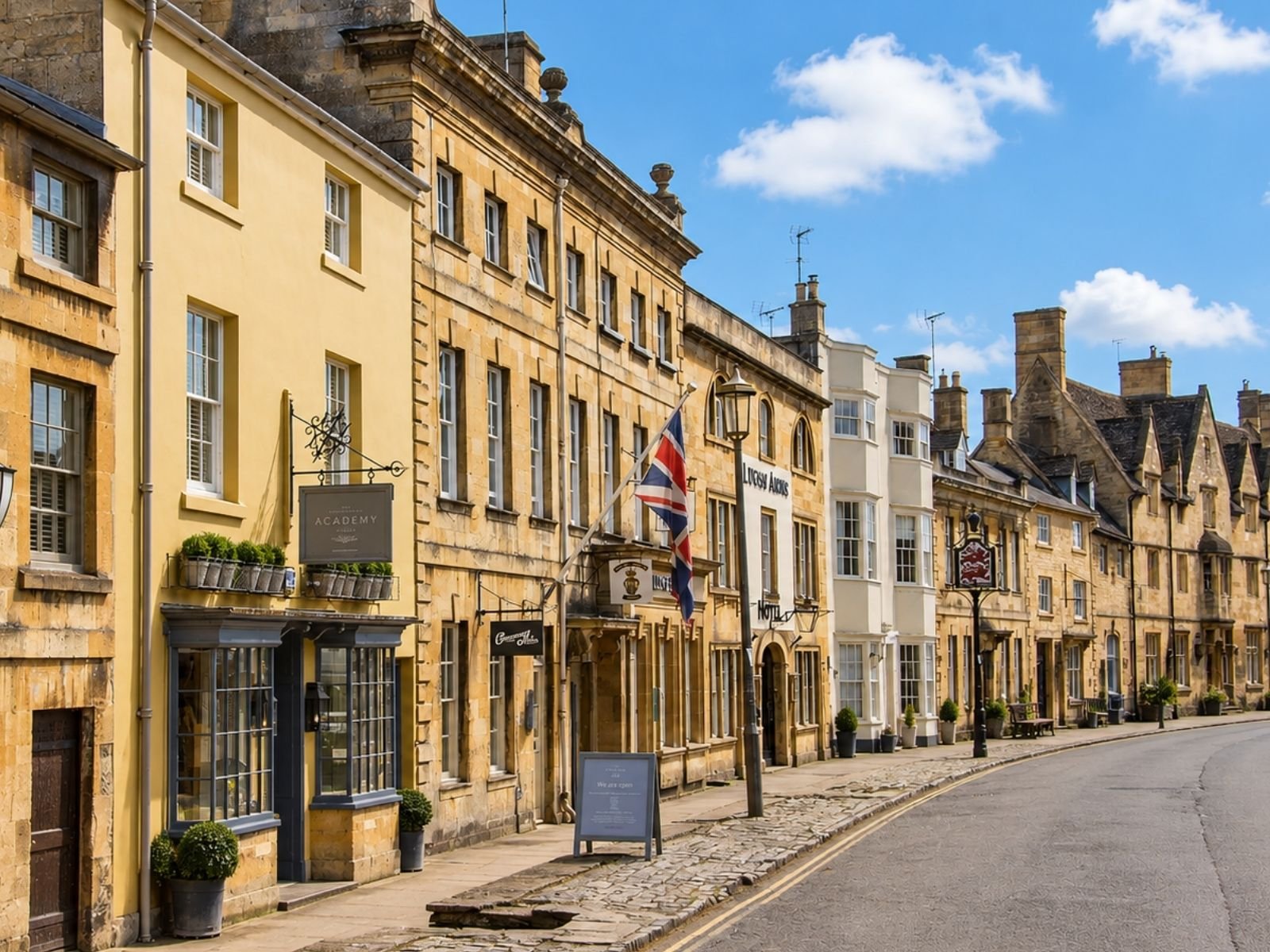
RICS-regulated building surveys tailored to Chipping Campden.
Golden-hued oolitic Cotswold limestone, traditional stone slate and thatched roofing, timber framing, Arts & Crafts craftsmanship, and suburban extensions define the local property landscape.
For a buyer, a GL55 postcode is just the start. The right survey depends on the individual property: its era, construction style, Cotswold stone performance, roof covering type, and alteration history.
Get a quote for your Chipping Campden property →READING
CHIPPING CAMPDEN
Understanding Chipping Campden starts with understanding how it grew.
Chipping Campden developed as a pre-eminent medieval wool town, reaching its architectural peak through wealthy merchant benefactors. Its wide, curving High Street displays iconic 14th to 17th-century golden limestone structures, anchored by the famous 1627 Market Hall and St James' Wool Church.
At the turn of the 20th century, C.R. Ashbee relocated the Guild of Handicraft here from London, embedding a rich Arts & Crafts heritage into local timberwork and masonry. Combined with modern expansion in Westington, the town presents a unique architectural tapestry across GL55.
Areas We Survey in
Chipping Campden.
Each neighbourhood illustrates a different chapter of Chipping Campden's building history and a distinct set of considerations for buyers and surveyors.
High Street Core
The golden jewel of the Cotswolds, lined with Grade I and Grade II listed wool merchant townhouses, gabled fronts, and stone slate roofs.
The main thoroughfare features 15th to 18th-century ashlar limestone facades, deep cellars, timber-framed rear wings, and intricate stone bay windows surrounding the historic Market Hall.
Golden limestone breathability, lime mortar degradation, cellar dampness, lead valley flashings, and Conservation Area compliance.
Explore historic character along High Street.
Sheep Street & Woolstaplers
Picturesque historic lanes featuring thatched cottages, timber framing, and early wool staplers' dwellings.
Sheep Street showcases charming honey-stone cottages, steep thatch roofs, low timber lintels, historic hearths, and original stone boundary walls.
Thatch thickness and ridge wear, timber frame joint decay, low lintel deflection, and sub-floor ventilation performance.
See historic cottages on Sheep Street.
Church Street & Grevel Quarter
Home to Grevel's House—the town's oldest residence—and the magnificent wool church of St James.
Church Street combines medieval stone masonry, Arts & Crafts restorations, substantial stone-walled gardens, and timber floor structures.
Cotswold stone slate heavy roof loads, historic masonry movement, chimney stack erosion, and floor joist damp exposure.
Explore historic architecture near Church Street.
Westington & Modern Outskirts
Established post-war housing, inter-war family homes, and modern reconstituted stone residential developments.
Extending south-west toward Westington and along Aston Road, these areas feature modern cavity-wall brick and stone constructions.
Cavity wall tie integrity, foundation behavior in local clay and oolitic limestone soils, roof truss ties, and extension expansion joints.
Explore suburban character in Westington.
Broad Campden, Mickleton & Ebrington
Sought-after North Cotswold stone villages surrounding Chipping Campden, famous for thatched cottages and barn conversions.
Encompassing picturesque rural communities across GL55 including Broad Campden, Mickleton, Ebrington, Paxford, and Hidcote Boyce.
Converted stone barn steelwork, thatch fire safety, private drainage/septic tank compliance, and high water table damp control.
Explore village streetscapes in Broad Campden.
See the building
character for yourself.
Move through real Chipping Campden streets and compare five distinct property environments. Each view illustrates the structural features behind our surveying advice.
Properties in central Chipping Campden require checks for golden limestone wall dampness, lime mortar breathability, cellar moisture, stone slate roof stability, and Conservation Area restrictions.
Street imagery is provided through Google Maps Street View. Google controls imagery availability, capture dates and on-map attribution.
Cotswold District Council protects Chipping Campden's architectural heritage.
Chipping Campden features an extensive designated Conservation Area covering the entire historic core, Sheep Street, Church Street, Westington, and surrounding GL55 stone villages.
Conservation area status restricts alterations to Cotswold stone slate and thatched roofing, timber window replacements, lime pointing, boundary wall removal, and tree management. Listed building controls apply strictly to Grade I, Grade II*, and Grade II structures throughout the town.
A building survey evaluates structural condition. Where past stone extensions, barn conversions, or listed modifications raise consent questions, we advise your conveyancer to verify planning and Listed Building Consents.
A building survey is not a substitute for legal due diligence, local authority searches, or official Environment Agency flood risk reports.
Chipping Campden's Cotswold stone & thatched homes demand specialised expertise.
Golden oolitic limestone cottages, thatched weaver dwellings, Arts & Crafts guild properties, and converted stone barns require traditional building construction knowledge and material care.
Carpenter's Heritage Division provides dedicated Heritage Building Surveys for historic properties across GL55, helping buyers navigate traditional lime mortars, stone slates, thatched roofs, oak timber frames, and heritage compliance.
Explore Heritage Surveys →The GL55 postcode doesn't decide.
The property does.
A modern house in Westington and a Grade I listed golden stone townhouse on High Street carry vastly different risk profiles and require different levels of survey depth.
Home Survey
Suitable for conventional modern properties in reasonable visible condition on stable ground.
PROPERTY
DECIDES
Building Survey
Recommended for older, non-traditional, heavily modified, stone-built, thatched, or period properties.
Carpenter's RICS Registered Valuers also provide independent property and specialist valuation services across the GL55 postcode area.
Common Structural Issues in Chipping Campden Properties
We do not judge a home by location alone. Construction era, building method, subsoil geology, Cotswold stone quality, roof type, and alteration history guide our inspection.
Heavy roof timber trusses & thatch wear.
Evaluating heavy stone slate rafter deflection, oak peg fatigue, thatch layer depth, ridge condition, and chimney fire barrier integrity.
Breathability & lime mortars.
Inspecting solid oolitic limestone walls for moisture traps caused by cement pointing, damp proof course failure, and stone face spalling.
Subterranean dampness & masonry.
Evaluating cellar dampness, vaulted stone arches, subsoil water ingress, and ventilation along High Street and Church Street.
Oak lintels & door openings.
Checking timber lintels over stone mullioned windows, sole plate decay, woodworm, and historic movement in weaver cottages.
Wall tie integrity & clay soils.
Evaluating 1970s–1990s cavity wall constructions in Westington for wall tie condition, retrofitted insulation issues, and foundation performance.
Structural steelwork & stone tie-ins.
Checking load-bearing wall removals, steel beam bear points, stone-to-brick junction seals, and converted agricultural roof structures.
Chipping Campden property.
Professional judgement.
Carpenter Surveyors is an independent RICS regulated practice established in 1988. Experienced Chartered Surveyors provide clear, objective advice to support your property decisions.


Before you
book.
Which survey should I choose for a property in Chipping Campden?
The type of survey you need in Chipping Campden depends on property age, construction materials, and historical significance. Carpenter Surveyors recommends an RICS Level 2 Home Survey for standard modern estate builds in Westington. An RICS Level 3 Building Survey is essential for historic Cotswold stone townhouses on High Street, thatched cottages on Sheep Street, timber-framed properties, or converted stone agricultural buildings across GL55.
How does Cotswold stone masonry affect building surveys in Chipping Campden?
Chipping Campden's signature golden oolitic limestone relies on breathable construction. Carpenter Surveyors evaluates solid wall damp performance, lime mortar repointing, stone spalling, and whether non-breathable modern cement renders or sealants have trapped internal moisture.
What should I consider when buying a thatched or Cotswold stone slate home in Chipping Campden?
Traditional roof coverings require careful expert analysis. Carpenter Surveyors inspects timber roof trusses for historic sag under heavy stone slate, checks oak peg or nail fatigue, evaluates thatch condition and fire barriers, and assesses lead gutters and chimney stacks.
What structural issues are common in Chipping Campden Conservation Areas?
Properties in Chipping Campden's Conservation Area frequently feature cellar dampness, historic timber frame movement, stone lintel settlement, and chimney stack erosion. We assess structural condition while advising your legal conveyancer to verify Listed Building Consents for historical alterations.
Do you survey converted stone barns and rural cottages in GL55 villages?
Yes. Carpenter Surveyors regularly inspects converted Cotswold stone barns, thatched cottages, and period properties across surrounding GL55 villages such as Broad Campden, Mickleton, Ebrington, and Paxford.
When is the best time to arrange my survey?
Ideally shortly after your purchase offer is accepted and before exchanging contracts, giving you complete clarity on structural condition before financial commitment.
Can I discuss the survey findings with the surveyor directly?
Yes. Our Chartered Surveyors are available to speak directly with you to discuss key report findings and answer technical questions.
Know what you're buying
before you commit.
Independent RICS Home Surveys and Building Surveys for properties across Chipping Campden, High Street, Sheep Street, Westington, Broad Campden, Mickleton, Ebrington, Paxford, and the GL55 postcode sector.
Get a survey quote →